Back to Basics: Complexity is an Inevitable Path of Cognition
2026-02-03
After reading swyx's article Don't Rush to Simplicity, I deeply resonated with it.
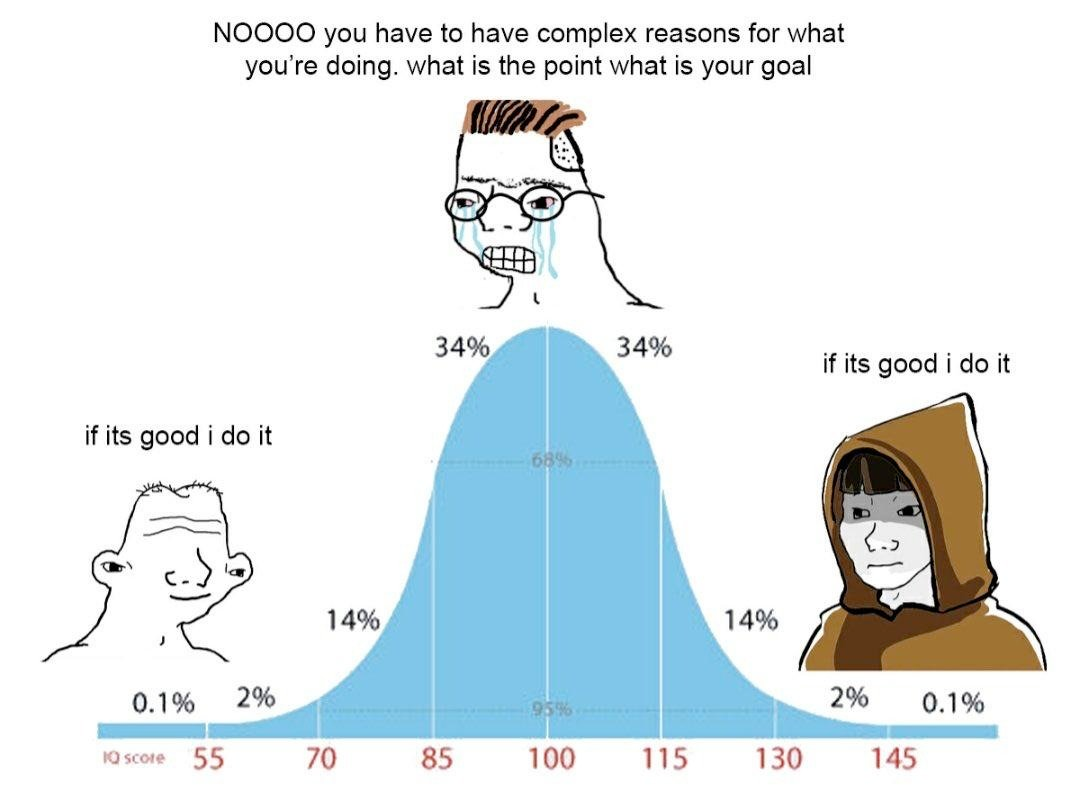
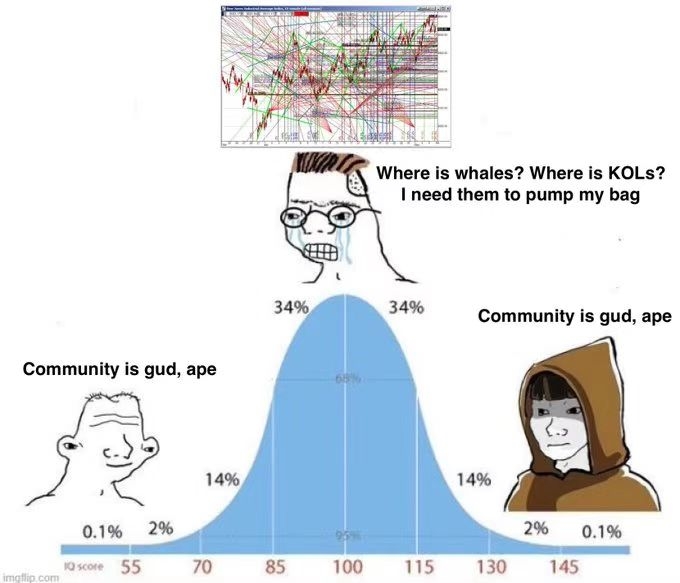
Oliver Wendell Holmes Jr.'s quote is spot on:
"I would not give a fig for the simplicity this side of complexity, but I would give my life for the simplicity on the other side of complexity."
I've been conducting experimental research in quantitative investing recently and have had a profound realization: The development of cognition is a spiral process of ascent. Whether it's AI or humans, no one can achieve mastery overnight. Yet, we must still reach that "simplicity on the other side of complexity," the state of returning to simplicity.
Starting with AI Programming
Lately, I've been using AI to assist with programming and have stumbled into quite a few pitfalls. Once, I asked an AI to help me set up an experimental project. After several iterations, the entire project started to spiral out of control—new features couldn't be added, old code couldn't be cleaned up properly, and zombie interfaces were left everywhere just for the sake of "compatibility."
Where did the problem lie? The AI hadn't experienced the evolution of this project; it didn't understand which abstractions were core and which were temporary workarounds. It could only see the current code and then patch it in the "safest" way possible. The result was increasingly bloated code, accumulating complexity, until eventually, a complete rewrite was necessary.
This made me realize: Good abstractions must be built upon a deep understanding of the problem domain. AI can help you write code, but it cannot complete that cognitive process of "wrestling with complexity" for you.
The "Midwit" Trap in Investing
The investment world is full of "simple wisdom" that sounds very reasonable: be a friend of time, the magic of compound interest, hold quality assets for the long term... These statements aren't wrong in themselves, but the problem is that many people treat them as formulas they can directly apply.
I call this the "Midwit trap"—using a seemingly complete theoretical framework to avoid deep thinking about specific problems.
For example, "steady growth" sounds wonderful, but it sidesteps a practical question: If your goal is to achieve a leap in wealth, how many years would it take with a 20% annual return? Does that timeframe align with your life stage?
Those who truly understand investing often return to principles that seem "overly simple." But their simplicity comes after being battered by the market; it's a simplicity that knows what to do and what not to do. For instance, the concept of a "protracted war of capital" is still an interpretation of classic investment principles. "Cut your losses short and let your profits run," "profits and losses share the same source"—these principles seem simple, so simple they sound like platitudes, but they contain a profound understanding of market complexity.
Why Can't We Skip Complexity?
You cannot become a master by imitating a master's actions.
What exactly does the complexity phase give us? I think at least three things:
First, the experience of failure. Many lessons can't be truly understood without stepping into the pitfalls yourself. Books say "it's easiest to lose money in a bull market," but only after being truly taught a lesson in the market will you grasp the weight of that statement.
Second, a complete mental model. Those who have experienced complexity have a complete map in their minds. They know where the pitfalls are in this field, which paths are viable, and which shortcuts are actually dead ends. This map cannot be obtained by reading someone else's summary.
Third, intuitive judgment. When you are sufficiently familiar with a domain, you develop a "sense of smell"—the ability to quickly judge whether a plan is reliable or if someone's words are empty. This intuition is a byproduct of long-term immersion in complexity.
What Counts as Traversing Complexity?
Since complexity cannot be skipped, what kind of behavior counts as "traversing" it rather than "avoiding" it?
My criterion is: Are you investing attention and harvesting cognition?
Traversing complexity is not simply "experiencing" but "deeply engaging." You need to participate with full concentration and then extract your own understanding from the experience.
Many behaviors that look like "learning" are actually avoidance:
- Reading many books, but letting information flow through without any sedimentation
- Running simulations but not seriously reviewing them, forgetting them afterward
- Copying someone else's code without understanding why it was written that way
The common thread in these behaviors is: Attention is not truly invested, or experience is not harvested for cognition.
True traversal is entering with questions and emerging with answers.
How to Reduce the Cost of Traversing Complexity?
Since complexity cannot be skipped, can we at least reduce the cost of traversing it?
My observation is: The "tuition fee" of complexity exhibits a distance decay effect.
- Accidents that happen far away—others' failure cases, historical lessons—can only make one sigh; the cognitive impact is weak. You forget after reading.
- Accidents that happen nearby—colleagues' pitfalls, friends' losses—are impressive enough to be remembered for a long time.
- Accidents that happen to oneself—are unforgettable, but come at the greatest cost.
So the question becomes: How can we use "small losses nearby" to replace "big losses of our own"?
In investment terms: You cannot learn to invest solely by reading books; that's too distant, with insufficient impact. But you also don't need to lose your entire fortune to learn; that's too expensive. The optimal solution is: Use controlled, small-scale real trading to gain sufficiently close cognitive impact.
This means:
- Be "in the game," but don't "go all in"
- Get your hands dirty, but cap the potential loss each time
- Allow failure to happen, but ensure it happens within your tolerance
The tuition fee of complexity cannot be waived, but small losses can substitute for big ones.
Conclusion
People who have experienced complexity and those who haven't have different understandings of "simplicity."
Is the "simplicity" of someone who has never left their small town the same as that of someone who has traveled the world and chosen to return to that town?
The latter's simplicity is a simplicity of choice. They know what they have given up and why they chose to stay.
On the other side of complexity lies not just "simple conclusions," but also "the ability to navigate complexity." This is probably the true meaning of returning to simplicity.
